Impartiality
Our content informs without attempting to persuade, focusing on process structure, terminology, and control considerations.
Saudi Vision AI showcases how automated decisioning and AI-assisted tooling fit within financial workflows through transparent modules—data inputs, rule sets, execution sequences, and auditable logs—delivering clarity and governance.
Our content offers objective overviews to help you grasp process design, monitoring concepts, and governance checkpoints used in automated systems. We do not provide personalized guidance or promise specific results.
Saudi Vision AI aims to deliver lucid, compliance-conscious explanations of automation concepts used in financial services. We illustrate how rule sets, model outputs, and monitoring layers can be assembled into auditable workflows with defined governance checkpoints.
We break down processes into practical components—data inputs, constraints, routing logic, and review steps—so readers grasp how operations are typically organized.
We emphasize permissioning, change tracking, and oversight routines to show how firms keep automation aligned with policies and obligations.
Our pages focus on process descriptions and operational considerations, avoiding assurances and keeping language precise and measured.
Saudi Vision AI is guided by commitments that prioritize responsible communication about financial workflows, automation, monitoring, and governance. These principles shape what we cover and how we present it.
Our content informs without attempting to persuade, focusing on process structure, terminology, and control considerations.
We emphasize constraints, monitoring, and review routines so readers grasp how safeguards shape automation-led operations.
We prioritize log-keeping concepts, time-stamped events, and structured summaries to support accountable review processes.
We outline role-based access and change-control practices to help organizations assign responsibility for configuration choices.
Saudi Vision AI content is produced with a documentation-first workflow. Topics are organized into consistent page structures that cover definitions, workflow steps, and operational controls, with a focus on readability and accessibility across devices.
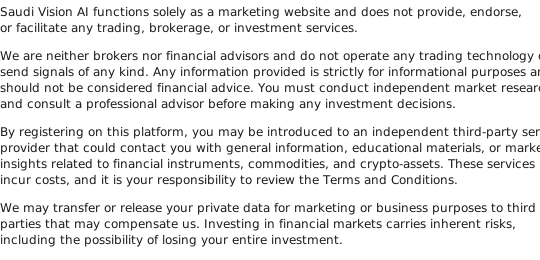
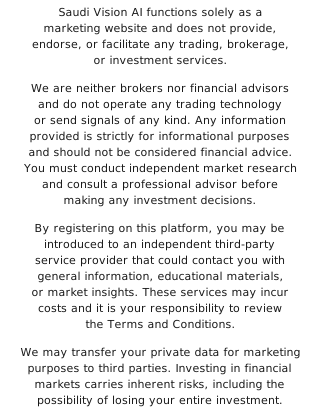
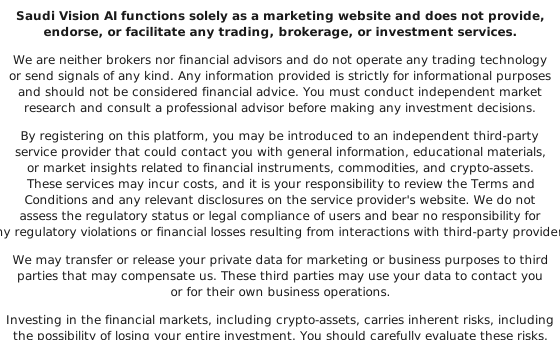
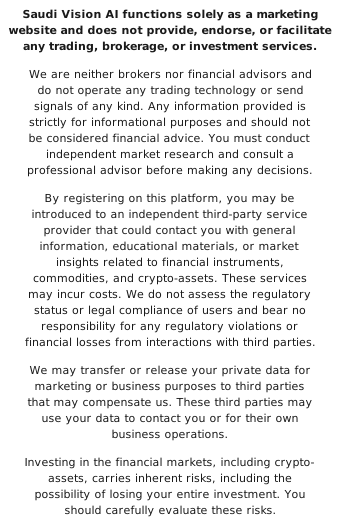
This website functions solely as a marketing platform and does not provide, endorse, or facilitate any trading, brokerage, or investment services.
Read More